
"yield reached"
2000 article(s) found

McCoffee's entry into the coffee industry has yielded results.
McDonald's entry into the coffee industry has achieved results. McCoffee under McDonald's brand has officially entered the iamp shopping mall of Huaihai Road. McCoffee has reached 100 stores in Shanghai.
Economic value of cultivated Coffee
The cultivated coffee has early income and high output value. A small amount of harvest can be obtained 2-3 years after planting, and the harvest period is 20-30 years. The average yield of dried beans is 100kg to 150kg per mu. The output value reached 2500 to 3750 yuan (25 yuan per kilogram of dried beans). The high yield reaches more than 250 kg, and the output value is even higher.

Katim Coffee Bean Flavor description Grinding Calibration method introduction to manor varieties
Katim coffee bean flavor description grinding scale treatment manor variety introduced that this variety belongs to high and stable yield. The results of trial planting in different ecological types show that as long as it is planted in accordance with high-yield cultivation techniques, a higher yield will be obtained, with an average yield of more than 150 kg per mu and a small area of more than 400 kg. 1. Baoshan State-owned Lujiang Farm was planted in March 1991.

Coffee Grade Yunnan Tieka Coffee Flavor description method Manor characteristics and taste introduction
In recent years, with the rapid development of coffee industry, the planting area of coffee in Yunnan has expanded from more than 300,000 mu in 2008 to more than 1.4 million mu in 2013, and the output has increased from about 30,000 tons to more than 80,000 tons. It is estimated that in 2015, the acreage will reach 1.5 million mu and the yield will reach 100000 tons. The three earlier subspecies in the Arabica series are Blue Mountain BlueMountain, Iron pickup Typica and

Yunnan Tieka Coffee Bean processing Variety taste characteristics Grinding degree Manor production area introduction
The so-called new variety of Yunnan Tiepika boutique coffee beans actually refers to catimor (Katimo), which is a hybrid of the timor species of the Roberta family and Arabica. Compared with the old varieties, it lacks rich aroma and taste, and has a relatively shallow smell of grass and soil, but its advantages are resistance to diseases and insect pests, easy to manage, high yield, and its yield per mu can reach up to 35.

Introduction to the planting requirements of natural weather for the yield of coffee trees
The yield of coffee trees on the requirements of natural weather is introduced to Xinglong, which is to try the authentic Xinglong coffee. On May 1, Yang Huining, a tourist from Heilongjiang, specially went to Xinglong to taste the coffee praised by Premier Zhou. Dong Yunping, associate researcher of the Chinese Academy of Tropical Agricultural Sciences and director of the Coffee Research Center, told reporters that with the rising tourism fever in Hainan in recent years, our province has
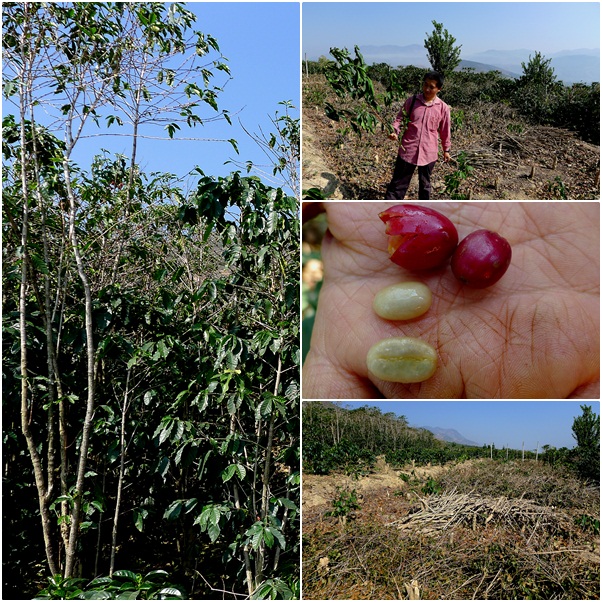
Yunnan Coffee Yunnan coffee varieties Tiebika and Bobang Yunnan coffee cultivation history
Yunnan coffee in China Yunnan coffee large-scale cultivation was in the mid-1950s, once planted on a scale of 4000 hectares. By the end of 1997, the province's coffee planting area had reached 7800 hectares. At present, the province's planting area accounts for 70% of the country's area, and its output accounts for 83% of the country's total. Whether it is from the planting area or coffee bean output, Yunnan coffee has established its dominant position in China. Jane
Coffee planting History of Coffee introduction and expansion in China in the early stage (5)
1. From the first peak period of the development of China's coffee industry (1952-1961) to the late 1940s, according to recorded figures, there are 2173.33 hectares of rubber plantations in Hainan Island, with a total of 867600 rubber trees, with an annual output of 199,000 tons of dry rubber, and more than 300,000 coffee plants. the annual output of coffee beans is 1 ton. According to a survey in the early 1950s, there was a large amount of coffee left in Fushan area of Chengmai County, with a total of 70,000.
The History of Coffee introduction and expansion in China in the early stage (5)
1. From the first peak period of the development of China's coffee industry (1952-1961) to the late 1940s, according to recorded figures, there are 2173.33 hectares of rubber plantations in Hainan Island, with a total of 867600 rubber trees, with an annual output of 199,000 tons of dry rubber, and more than 300,000 coffee plants. the annual output of coffee beans is 1 ton. According to a survey in the early 1950s, there was a large amount of coffee left in Fushan area of Chengmai County, with a total of 70,000.

Which area of Assam black tea tastes good? Does long-term drinking Assam black tea have side effects?
It is clear that disruptions in rainfall and temperature patterns are affecting the tea industry, and the impact is sure to expand. The drought in Africa has reached a crisis level. In northern Kenya, more than 1 million people face hunger. In India, heavy rainfall has eroded hillsides and destroyed plants. The low-lying areas of Chinese farms are covered with dust
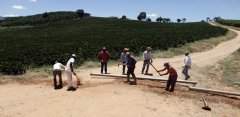
Coffee goods fell 23% into a bear market.
Despite an increase in rainfall last month, easing the drought in Brazil, the world's leading coffee producer and exporter, international coffee futures fell into a bear market, with futures prices down 23 per cent since April.
Angora coffee beans
Angola's Angola, which has been growing coffee for more than 100 years, ranked first in Africa until 1960 and reached 225000 tons in 1979, ranking second in Africa and fourth in the world. The output in 1992 was 5000 tons. Sisal production is second only to coffee, and the level of per unit yield is higher. In 1986, the output reached 20,000 tons, sisal ranked second in Africa both in terms of output and export volume. Luo'an, Xinhuanet

A brief introduction to the treatment method of grinding degree and baking degree of fragrant and mellow Vietnamese fine coffee beans
Vietnam Coffee Corporation (VINACAFE) is a 100% state-owned enterprise with 73 companies and farmers under its jurisdiction.
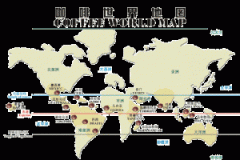
African coffee Angora coffee beans
Angolan coffee Angola Angola has been growing coffee for more than 100 years, and its output has been the first in Africa until 1960, reaching 225000 tons in 1979, ranking second in Africa and fourth in the world. The output in 1992 was 5000 tons. Sisal production is second only to coffee, and the level of per unit yield is higher. In 1986, the output reached 20,000 tons, sisal ranked second in Africa both in terms of output and export volume.
Price of Angolan coffee beans
Angolan coffee Angola Angola has been growing coffee for more than 100 years, and its output has been the first in Africa until 1960, reaching 225000 tons in 1979, ranking second in Africa and fourth in the world. The output in 1992 was 5000 tons. Sisal production is second only to coffee, and the level of per unit yield is higher. In 1986, the output reached 20,000 tons, sisal ranked second in Africa both in terms of output and export volume.

A brief introduction to the flavor, taste and aroma characteristics of Vietnamese boutique coffee beans
G7 coffee is one of the most famous coffee in Vietnam. Each coffee bean is selected from the best coffee area in the Vietnamese plateau and baked with special cream. The creamy, mellow Wiener three-in-one instant coffee is produced and exported by Vietnam Bian Heweina Co., Ltd., the market share of Vina coffee in Vietnam has been maintained at more than 45%, in the leading position. At present, Wiener has been connected.

Flavor description of Yunnan Tieka Coffee Bean introduction to the characteristics of varieties produced in the manor area
The so-called new variety of Yunnan Tieka coffee beans actually refers to catimor (Katimo), which is a hybrid of timor and Arabica from the Roberta family. Compared with the old varieties, it lacks rich aroma and taste, and has a relatively shallow smell of grass and soil, but it has the advantages of resistance to diseases and insect pests, easy to manage, high yield and the highest yield per mu can reach 350kg.
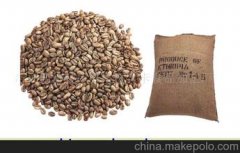
A brief introduction to the Market Price of Vietnamese Fine Coffee Bean varieties
Coffee cultivation in Vietnam covers an area of about 500000 hectares, of which 10% are owned by state-owned enterprises and farms, and 85% by farmers and landowners. The scale of the manor is small, usually 2-5 hectares, and the large manor is about 30-50 hectares, but the number is small. Vietnamese coffee ranks second in all agricultural products exported from Vietnam, second only to rice. Every year, about 300000 farmers are engaged in coffee cultivation, with a labor force of 600000.

Description of characteristics and Flavor of Yunnan Sunshine Katim Coffee Bean introduction to varieties of Origin stories
Description of the characteristics and flavor of sunny Katim coffee beans in Yunnan the planting history of coffee in Yunnan can be traced back to 1892. A French missionary brought coffee to Yunnan from abroad and successfully planted it in a valley in Binchuan County, Yunnan Province. The coffee plants of this batch of coffee seeds are still blooming and bearing fruit in Binchuan County. Yunnan Coffee rules
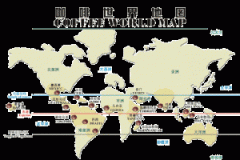
African specialty coffee Angola boutique coffee beans
Angolan coffee Angola Angola has been growing coffee for more than 100 years, and its output has been the first in Africa until 1960, reaching 225000 tons in 1979, ranking second in Africa and fourth in the world. The output in 1992 was 5000 tons. Sisal production is second only to coffee, and the level of per unit yield is higher. In 1986, the output reached 20,000 tons, sisal ranked second in Africa both in terms of output and export volume.